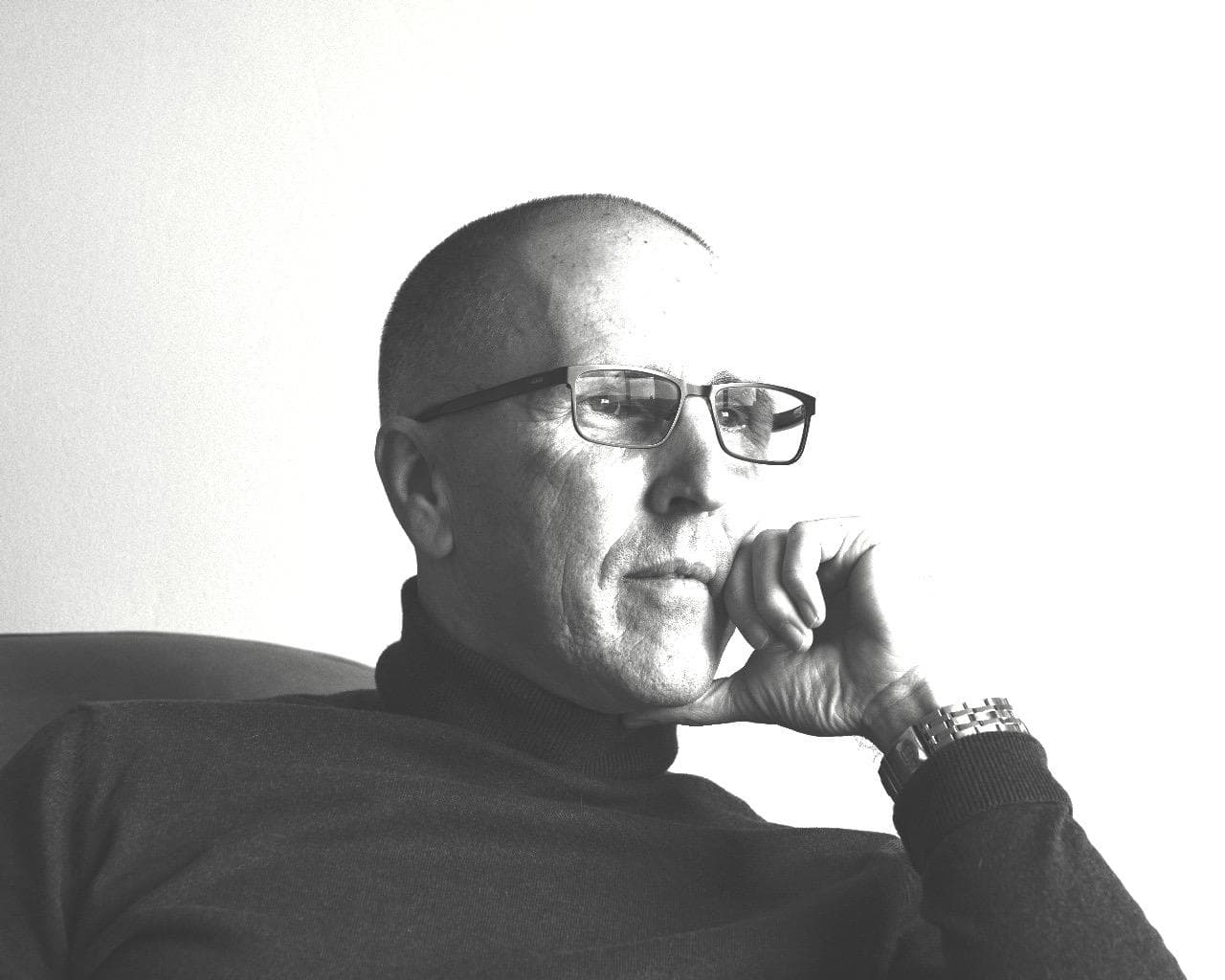
Why I Started The Offload Room
The Offload Room grew from my own experience and from listening to the experiences of women and men. I have heard how much people carry while continuing to work, care for others and meet the demands of everyday life. I also know from my own life how much can remain hidden behind the appearance of coping.
I wanted to create a private, structured way for people to work with that load. A person should be able to take part without having to tell their story, speak in a group or explain their circumstances. That is the purpose of The Offload Room.
The Origins of The Offload Room™
The Offload Room did not begin as a professional project. It started in a doctor’s office, with my father, my mother, and me sitting across from a physician who carried devastating news.
The doctor looked at my father and said words that are burned into my memory: “Mr. Pienaar, you have cancer. The reality is that you are going to die. If you undergo chemotherapy, you may live for 9 months. Without it, six. Which do you prefer?”
In that moment, I was stunned. I felt numb, almost frozen, as though the world had shifted under me. I remember looking at my father’s face and seeing the shock ripple across it. He was a man not easily rattled, but in that instant, he looked as though he had been struck by lightning. My mother sat quietly, taking it in as well, and the three of us shared a silence that said more than words could. It was a mix of disbelief, grief, and helplessness all rolled into one.
My father chose chemo. I cannot tell you why—perhaps instinct, perhaps hope. What I do know is that from that moment, I watched him grow weaker each day. The chemo drained him, left him nauseous, shrank his body until he was almost skeletal. Since my parents lived nearby, I visited him every day. Each visit carried the weight of time running out.
He told me once he wanted to see the sea one last time—such a simple wish, so human. But by the time I could arrange my own schedule, he was already too weak. He never saw the sea again. That regret has stayed with me.
What haunted me most, though, was not the trip he never took but the conversations we never had. In those months, we discussed practical matters: how I should care for my mother and what would need to be done when he was gone. But I longed for something else. I wanted him to tell me how he was really doing. Not “I feel sick” or “I feel nauseous,” but what was happening in his heart. What it felt like to face the end. I wanted to hear his story—about marrying my mother, about his life, about the things he had loved and struggled with. I wanted something more than silence.
Yet the silence endured. My father was the kind of man who kept everything close to himself. He grew up in a home where my grandfather was the same. Friends and family often said that if you told my father something, he would never repeat it to anyone; he was figuratively a vault. He would rather take it to the grave. And he did.
On the morning he died, almost nine months to the day after that diagnosis, I was standing by his side. And what I felt, more than anything, was that he died carrying too much. He left with a heavy heart, with unspoken truths locked inside.
In the hours that followed, I grieved. That morning was one of the saddest of my life. But the very next day, at nine o’clock, I put on a brave face and walked into a lecture hall to teach my class. I stood there and delivered as if nothing had happened. Afterward, I went to the head of the department and said, “I’ll be away for a few days, but I’ll come in for my classes. Even in the rawness of grief, I showed up, carried on, and performed. And sometimes I wonder what that did to me—what weight I added to my own being by refusing to stop, refusing to be undone, refusing to admit that I was carrying too much. In that way, I saw the same pattern in myself that I had seen in him: keep it inside, keep going, never let it spill out.
Looking back, I wish I had started asking him different questions much earlier in my life. I left them too late. And that is something I want to mention as a side note to anyone reading this: do not wait. Please do not wait until the end to ask people about their lives. Ask your parents, your friends, your co-workers now: What has shaped you? What do you remember? What mattered most? We sometimes get the chance to ask these questions when death is near, but the truth is, death can come in the next year or in the next minute. Do not wait for that moment. Ask now.
Because here is what I know: my father did not intend to leave his life as a blank space, but silence is what remained. His life was shaped by challenges, by his own demons (figuratively), by the cultural norm of stoicism that told him to keep pushing through. And the result is that when I stood beside him at the end, I was left with questions that will never be answered.
That is the seed from which The Offload Room grew. It has taken me many years to put language and structure around it, but the heart of it is simple: to give people a way to release what they carry without needing to talk, explain, or confess. To allow them to put down the weight before it hardens inside them. To make it possible to walk away lighter, even if no words are ever spoken.
Sometimes I think to myself: if something like The Offload Room had existed then, maybe it could have opened a door for me with my father. Perhaps it could have given him another way to unburden himself. That will never happen now. But what I can do—and what I want to be remembered for—is to give that possibility to others. To leave behind something that makes it just a little easier for people not to carry their hidden weight all the way to the grave.
That is my aspiration. That is my offering back to the world.
Articles by Dr. Cobus Pienaar
A selection of writings available to read as PDF.
Ready to offload?
You don't need to carry it all. The Offload Room is ready when you are.